The race to power the next generation of artificial intelligence is increasingly defined by the hardware that runs it. While Nvidia has long been the undisputed leader in AI training, a new wave of specialized chips is emerging, promising to revolutionize the inference stage—where AI models are actually used. This analysis explores the competitive landscape, focusing on Groq's unique approach, the importance of a domestic supply chain, and the predictions for the future of AI hardware.

The Groq Advantage: Deterministic Architecture and Inference Speed
Groq, an AI accelerator company, has carved a niche by focusing exclusively on inference, bypassing the training market dominated by Nvidia. Its core innovation is a deterministic chip architecture built on three key technologies:
- All-SRAM Design: The chip integrates all SRAM (Static Random-Access Memory) directly on the die, eliminating the latency associated with traditional HBM (High Bandwidth Memory). This is a fundamental architectural difference.
- Custom High-Speed Networking: This allows for seamless connection of multiple chips, enabling massive scaling for large models.
- Deterministic Compiler: This software layer guarantees predictable performance, allowing models to be deployed across many chips with consistent results.
According to Groq's COO, Sunny Madra, this architecture allows their 14nm chip, manufactured in the US, to deliver inference speeds that have attracted over 2.5 million developers in under two years. The primary metric of success is tokens per second, where Groq's chips have demonstrated a significant edge, going viral for their speed in 2024.
How Groq Competes with Nvidia
The competitive dynamic is not a direct head-to-head battle but a specialization within a rapidly expanding market. Nvidia dominates the training phase, while Groq targets the inference phase, focusing on cost, latency, and speed. The market is growing so fast that no single company can service all demand. As Madra noted, "The market size is growing so fast that no one company can capture all the market." This creates opportunities for multiple players to coexist and thrive.
The American AI Stack: Supply Chain and Geopolitical Strategy
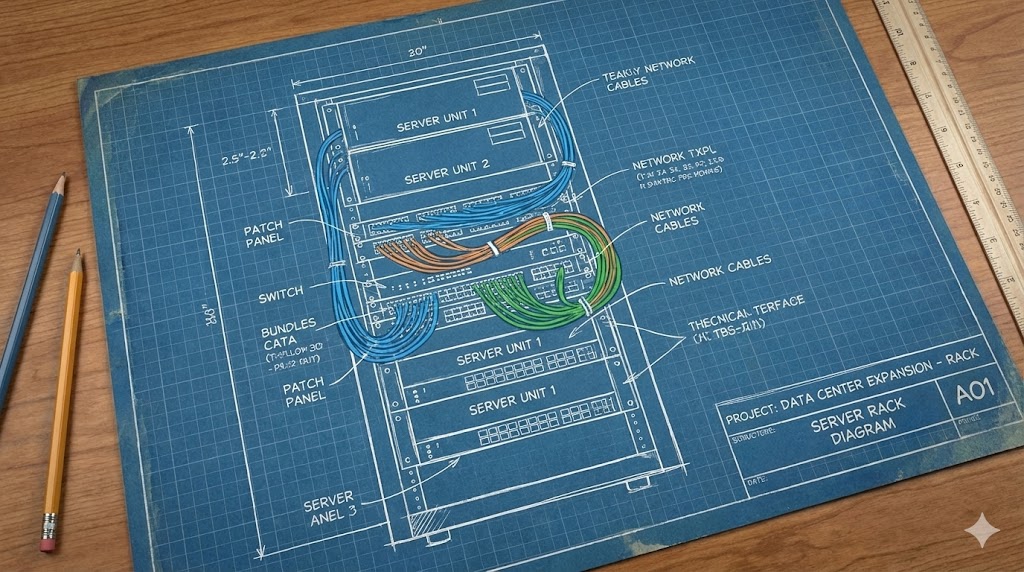
A critical differentiator for Groq is its commitment to a fully American supply chain. This is not merely a marketing point but a strategic move to ensure resilience against geopolitical disruptions and tariffs. The supply chain is vertically integrated:
- Chip Fabrication: Upstate New York (GlobalFoundries)
- Card Assembly: Carson City, Nevada
- Server Assembly: Milpitas, California
- Final Rack Assembly: Fremont, California
This approach directly addresses the bottlenecks in US semiconductor production. The identified bottlenecks include:
- Access to Latest Node Production: Getting 3nm and 2nm fabrication into the US is a primary challenge, though Nvidia has pushed TSMC to start production in Arizona.
- Skilled Workforce: Operating advanced fabs requires specialized personnel, a gap created by decades of offshoring.
- Environmental Regulations: The "dirty" processes involved in chip manufacturing (e.g., rare earth processing, PCB creation) face stricter environmental protections in the US, adding complexity and cost.
Open Source vs. Closed Source Models
The future of AI models is a key battleground. The consensus from industry leaders is that by the end of 2026, the leading general-purpose models will be open-source. This is driven by the compounding effect of community contributions, similar to the evolution of Linux. However, closed-source models will likely lead in specialized domains (e.g., math, science) where proprietary data provides an edge.
| Model Category | Leading Example (2025) | Key Advantage | Predicted Future (End of 2026) |
|---|---|---|---|
| Closed Source | OpenAI's GPT-5, Google's Gemini 3 | Proprietary data, massive training budgets | Lead in specialized fields (math, science) where unique data is key |
| Open Source | DeepSeek R1, Reflection AI | Community contributions, rapid iteration, cost efficiency | Lead in general-purpose tasks, democratizing access to frontier AI |
The ability to distill knowledge from leading closed-source models (like GPT-4) has allowed Chinese open-source models to catch up rapidly. This has created a feedback loop where US companies can also use these models to generate synthetic data for their own improvements.
 The AI hardware market is entering a phase of rapid diversification. While Nvidia remains the dominant force in training, specialized inference chips like Groq's are proving that speed and efficiency can be a powerful competitive advantage. The push for a domestic US supply chain is not just a political goal but a strategic necessity for long-term resilience. The convergence of open-source models and specialized hardware is set to democratize AI access, driving the next wave of innovation.
📅 정보 기준일: 2025-05-12
함께 보면 좋은 글
- Video Editing PC Build Guide: Why Intel Still Beats AMD for Adobe Premiere Pro (Benchmarks & Specs)
- Stellar Alchemy How Stars Forge Every Element from Hydrogen to Iron