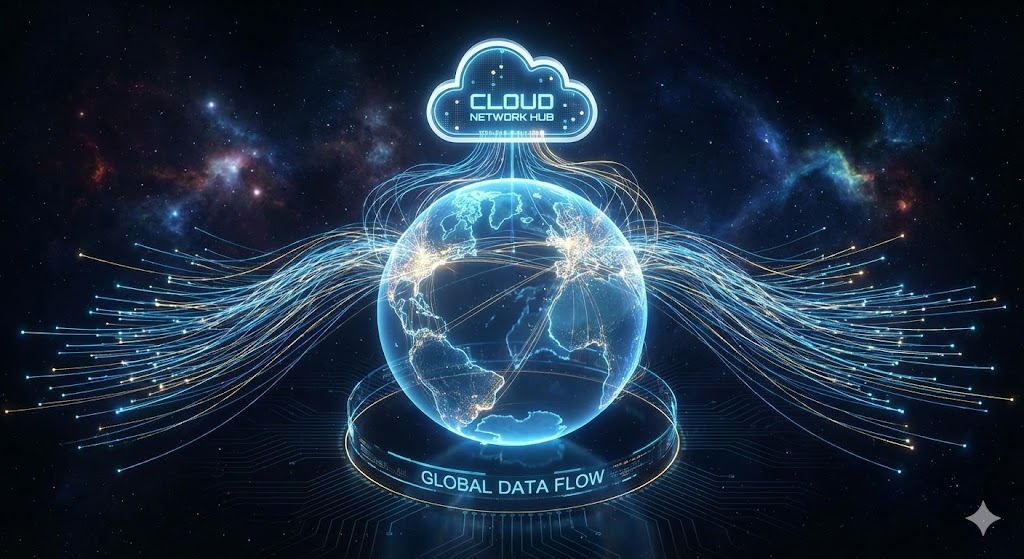
🚀 A New Horizon for Data Processing Beyond Earth
The explosive growth of AI is skyrocketing demand for data centers that consume vast amounts of power and cooling water. As cases like Tucson, Arizona—where a data center proposal was rejected due to energy and water concerns—become more common, an innovative solution is gaining attention: building data centers in space.
The historic spacecraft scheduled for launch this week from Cape Canaveral is not just another satellite. It is the first testbed for an AI data center, equipped with NVIDIA H100 chips over 100 times more powerful than any GPU ever sent to space. This is not merely an experiment but the first step in an audacious vision to fundamentally alter the geography of data infrastructure.
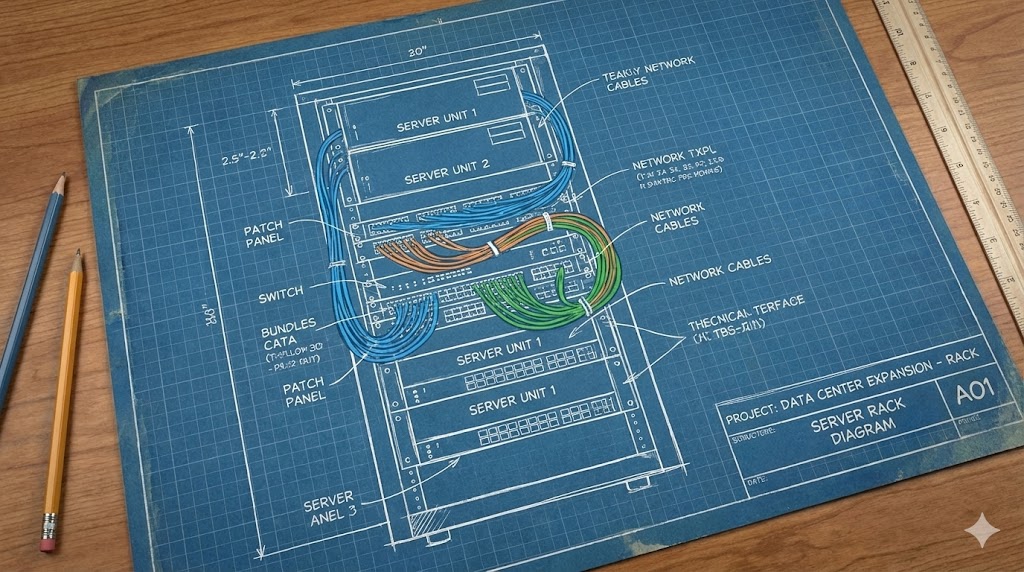
🔍 Why Space, Not Earth? Analyzing the Core Drivers
The traditional terrestrial data center model faces two fundamental limits: physical constraints on energy supply and massive freshwater consumption for heat dissipation. In contrast, the space environment offers unique solutions to these two problems.
- Abundant Solar Energy: In Earth's orbit, solar power is available 24/7 without interference from clouds or night. This means approximately 6 times higher energy production efficiency per square meter compared to ground-based solar panels.
- Natural Deep-Space Cooling: The background temperature of space is around -270°C. This cryogenic environment opens the possibility of handling 'cooling'—one of the largest operational costs for data centers—much more efficiently, sometimes even passively.
These environmental advantages have begun to be economically viable with the advent of fully reusable rockets like SpaceX's Starship. Calculations suggest that if launch costs fall to around $500 per kilogram, a 'tipping point' could be reached where the cost of launch becomes cheaper than the combined cost of terrestrial land permits, battery storage, and additional solar panels.

⚖️ Pros, Cons, and Technical Hurdles of Orbital Data Centers
As with all revolutionary ideas, space-based data centers present clear advantages alongside significant challenges. Synthesizing discussions from technical communities and experts leads to the following assessment.
Key Advantages (Pros)
- Limitless Clean Energy Source: Utilization of sustainable solar power without fossil fuel dependency.
- Zero Terrestrial Environmental Burden: Elimination of freshwater consumption for cooling and large-scale land occupation issues.
- Potential for Global Low Latency: The potential to provide uniformly low latency worldwide through orbital placement.
Challenges (Cons) & Technical Barriers
- High Initial Launch Cost & Risk: Risk of destruction of expensive hardware in case of launch failure.
- Cosmic Radiation Hardening: Need for protection technology against space radiation that threatens semiconductor chip performance and lifespan.
- Difficulty of Maintenance & Repair: Physical maintenance in orbit is nearly impossible.
- Data Transmission Bandwidth: Establishing ultra-high-speed, high-capacity data links to transmit processed results to Earth.
Economic Viability Comparative Analysis (Conceptual Model)
| Comparison Factor | Terrestrial Solar Data Center | Orbital Solar Data Center |
|---|---|---|
| Energy Source | Intermittent Solar (Day/Night) | 24/7 Continuous Solar |
| Required Solar Panels | Baseline Amount (1X) | ~1/6 the Amount (For equivalent output) |
| Essential Infrastructure | Land Permits, Battery Storage, Cooling Towers | Launch Cost, Radiators, Communication Systems |
| Primary Constraints | Land Availability, Community Opposition, Water Supply | High Initial Launch Cost, Technical Reliability, Radiation |
| Long-Term Outlook | Local Constraints & Rising Costs | Economies of Scale Possible if Launch Costs Drop |
🌌 Conclusion: The Infrastructure War for the Next Generation
The exponential increase in data processing demand is evolving beyond mere technological competition into a matter of national security and resource acquisition. The idea of building data centers in space is not mere science fiction. It appears to be an inevitable challenge of our era, driven by the convergence of advances in reusable rocket technology, the high performance of AI hardware, and global demands for sustainability.
If the first launch succeeds, it will be more than a single experiment; it will be a signal flare announcing the dawn of the orbital computing industry. The prospect that most new data centers could be built in space within the next decade for energy efficiency is no longer confined to the realm of sci-fi novels.
This massive transition could represent not only a technological achievement but also a step towards mitigating conflicts over Earth's finite resources and humanity's first move to harness the abundant energy of the solar system for civilization. The outcome of this test launch poses a fundamental question about how we will design our future digital infrastructure, far beyond a simple 'tech demo'.
Recommended Reads
- To understand the current state of high-performance computing, check out 인텔 코어 울트라3 205 리뷰 🚀 가성비 끝판왕 CPU로 게이밍 PC 조립하기.
- If you're interested in products where technology meets aesthetics and practicality, see 🎵 마샬 Heston60 사운드바 리뷰 인테리어템인가, 진짜 오디오 기기인가?.