The AI Big Bang Has Already Begun
In 2016, AlphaGo defeated Lee Sedol in a five-game match watched by over 200 million people. That moment was not just a milestone for board games. It was the starting gun for a chain reaction that is now accelerating beyond human comprehension. According to the 2025 India AI Summit, AI has entered a phase of recursive self-improvement — AI building better AI. The New York Times calls it the "AI Big Bang." This article breaks down what that means for coding, science, mathematics, and the physical world.
From TensorFlow to Transformers: The Foundation
The 2015 Breakthrough
In 2015, Google open-sourced TensorFlow, democratizing deep learning for millions of developers. A year later, Google developed the TPU (Tensor Processing Unit) to handle the massive computational load. By 2017, the landmark paper Attention Is All You Need introduced the Transformer architecture — the backbone of every modern AI model, including ChatGPT, Gemini, and Claude.
DeepMind's Long Game
Google acquired DeepMind in 2014 under one condition from CEO Demis Hassabis: technology control must remain independent. DeepMind's mission — to develop safe AI for humanity — remains unchanged. Their AlphaGo victory was never the goal; it was a proof of concept for something far bigger.
For a broader look at how demographic and technological shifts reshape global trends, see Japan's Population Collapse: A Global Crisis in the Making.

AI Conquers Science, Math, and the Physical World
AlphaFold and the Nobel Prize
In 2020, DeepMind's AlphaFold 2 solved the 50-year-old protein folding problem. Proteins are chains of amino acids that fold into complex 3D structures. The number of possible folding configurations exceeds the total atoms in the observable universe. AlphaFold predicts these structures in minutes with high accuracy. In 2024, Demis Hassabis received the Nobel Prize in Chemistry.
AI in Mathematics and Robotics
| AI System | Domain | Achievement | Accuracy/Level |
|---|---|---|---|
| AlphaFold 2 | Biology | Protein structure prediction | Nobel Prize-winning accuracy |
| AlphaProof | Mathematics | IMO problem solving | Silver/Gold medal level |
| AlphaEvolve | Coding | Algorithm discovery | 10x developer productivity |
| AlphaEarth | Climate | Weather prediction | Superior to traditional models |
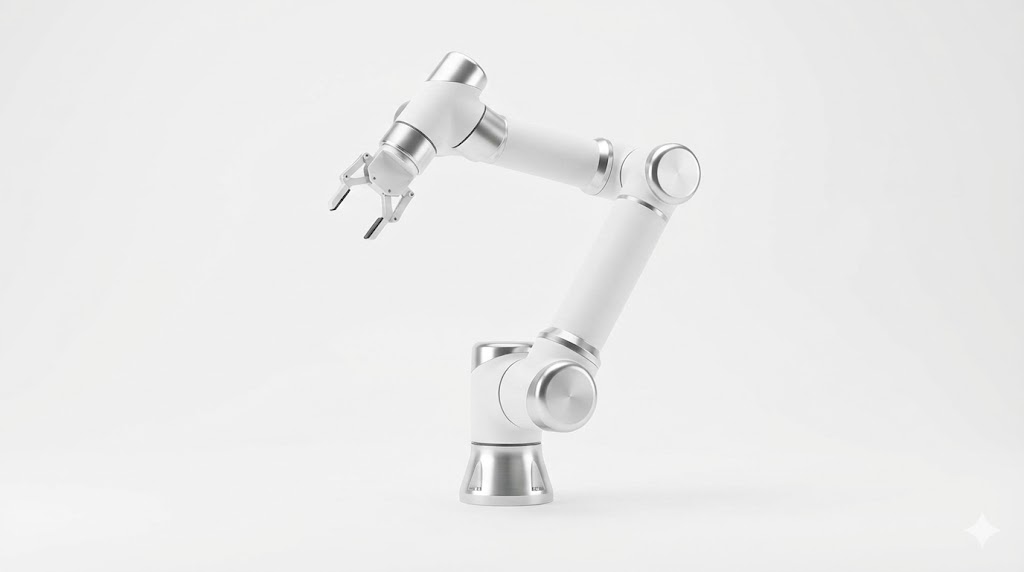
| Gemini Robotics 1.5 | Robotics | Physical world understanding | Multi-modal spatial reasoning |
For a detailed look at how premium tech products are evaluated, check out AirPods Max 2 Review: Premium Sound & Features.
📅 Information date: 2026-03-25
The Next Decade: What Comes After AGI?
Google DeepMind states that the ultimate goal — AGI — is now within reach. In just ten years, we went from AlphaGo's creative move 37 to AI that writes code, solves math Olympiad problems, predicts protein structures, and simulates physical environments. The AI Scientist agent can now generate hypotheses, run experiments, and write full papers. The critical question is not whether AI will surpass human scientific output, but whether we can ensure it remains safe and responsible. As DeepMind's mission states: develop AI responsibly for the benefit of humanity.