The Global AI Arms Race: Korea's Strategic GPU Acquisition 🚀
As anxieties about AI-driven job displacement reach a fever pitch globally—exemplified by Amazon's plan to cut 30% of its workforce by 2027—a significant development has emerged from East Asia. NVIDIA CEO Jensen Huang's recent visit to South Korea culminated in a landmark deal: the prioritized supply of 260,000 next-generation Blackwell GPUs to Korea by 2030.
This isn't merely a large purchase order; it's a potential geopolitical game-changer that could solidify South Korea's position as a top-three global AI power, alongside the US and China. This analysis delves into the data behind this deal and its ramifications for the future of AI.
The Indispensable Role of GPUs in the AI Era
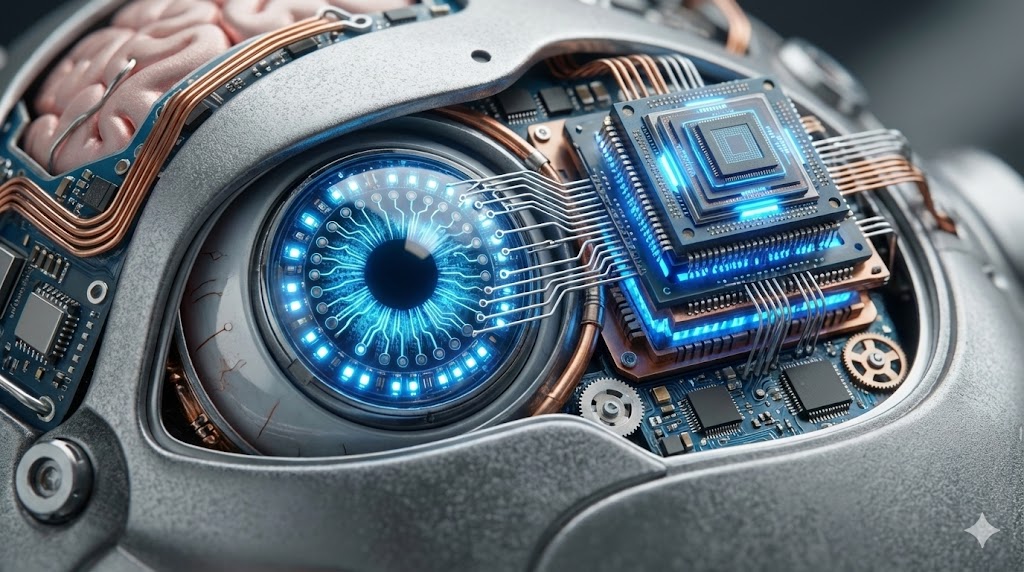
In the development of advanced AI, particularly Large Language Models (LLMs) and the pursuit of Artificial General Intelligence (AGI), GPUs are the new oil. Their parallel processing architecture makes them uniquely suited for the immense computational loads required for training state-of-the-art models. Industry reports indicate that training a single frontier AI model can require the coordinated effort of thousands of GPUs.
The consensus is clear: without substantial GPU access, initiating sovereign AI development is virtually impossible. This has triggered a global scramble for these critical components. While the South Korean government's initial goal of securing 50,000 GPUs by 2030 was met with skepticism, the new 260,000-unit deal with NVIDIA represents an unexpected and monumental strategic advantage.

Projected Impact: How 260,000 GPUs Will Reshape Korea's AI Ecosystem
This massive infusion of computational power is expected to accelerate R&D and infrastructure build-out across Korea's tech conglomerates, often referred to as Chaebols. Synthesizing expert opinions and industry analysis, the anticipated ripple effects are substantial.
| Entity | Primary Use Case (Projected) | Expected Outcome |
|---|---|---|
| Samsung Electronics | AI semiconductor fabs, consumer robotics development | Manufacturing optimization, new revenue streams |
| Hyundai Motor Group | AI-powered smart factories, autonomous vehicles, physical AI | Manufacturing innovation, leadership in future mobility |
| SK Telecom / Naver | Enhancement of Korean LLM 'HyperClova X', AI cloud services | Strengthened cloud competitiveness, AI platform dominance |
| Academia & Research Institutes | Provision of cutting-edge AI research infrastructure | Talent retention and acceleration of foundational research |
The most significant long-term benefit may be stemming the brain drain and creating high-value jobs. For years, top Korean AI talent often sought research opportunities abroad due to superior infrastructure. Establishing world-class GPU clusters domestically creates a powerful magnet for global researchers and startups, fundamentally transforming the local innovation ecosystem from the ground up.
Navigating the AGI Horizon: Preparedness is Key
Artificial General Intelligence (AGI)—AI with human-like cognitive abilities across a broad range of tasks—is predicted by many experts to emerge in the early to mid-2030s. While AGI promises unprecedented productivity gains, analysts from forums like LessWrong and academic circles warn it could reshape the job market on a scale beyond current projections.
Historical precedents, from the Luddite movement to Rome's "bread and circuses," demonstrate that technological transitions often exacerbate social tensions. Therefore, parallel investments in robust social safety nets, continuous re-skilling programs, and rigorous AI ethics frameworks are non-negotiable.
Korea's GPU deal represents a critical opportunity to transition from a technology adopter to a technology creator. As discussed in our analysis on [AI breakthroughs and the barriers of continual learning](https://tech.infolabhq.com/en/trends/ai-news-breakthrough-llm-science-continual-learning-sora-math), foundational research is paramount. Furthermore, innovative developments like the world models explored in [Google DeepMind's Genie 3](https://tech.infolabhq.com/en/trends/genie-3-google-deepmind-world-model-ai-analysis) highlight new creative frontiers in AI.
In conclusion, the path forward in the AI era is not mere fear, but strategic adaptation. Korea's infrastructure investment is a formidable first step. The ultimate survival strategy, for nations and individuals alike, will be cultivating a proactive, learning-centric mindset to navigate and shape the coming technological wave.