The New Era of Humanoid Robots in the Workplace
In 2025, humanoid robots have moved from laboratories to actual warehouses and factories. NVIDIA's Jensen Huang visited Korea to discuss LG's humanoid robot collaboration. China's Unitree announced mass production of human-like robots by year-end. German factories plan to deploy thousands of units. But when Figure AI's robot sorted 250,000 packages over 200 hours, humans still won a 10-hour sorting competition. Why do we feel anxious despite winning? The answer lies not in current robot capabilities, but in the trajectory of technological development.
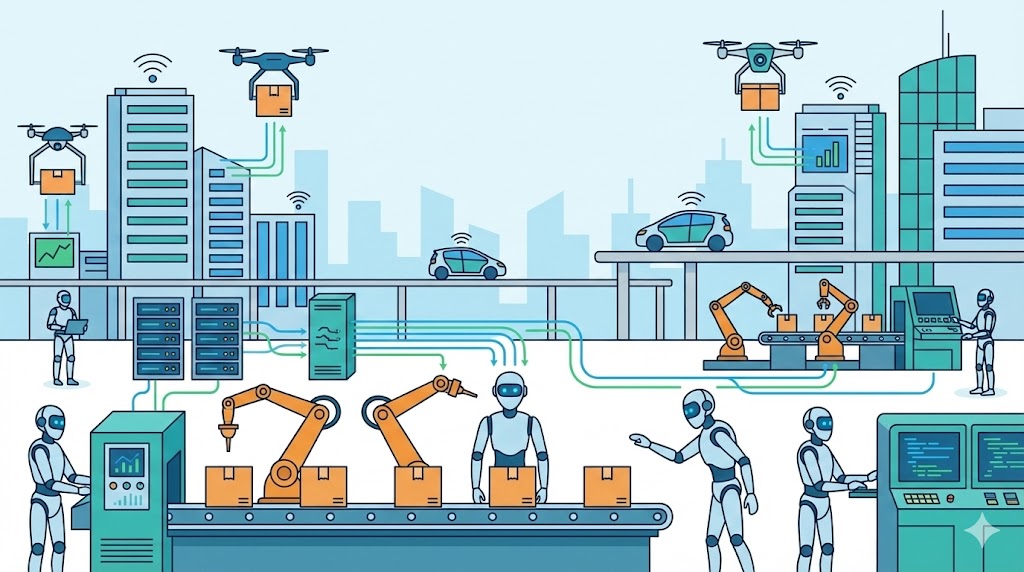
Understanding Robot vs Human Labor Economics
The Reality Behind Robot Demonstrations
Figure AI deliberately selected tasks where robots could match human performance — flipping packages using five-finger manipulation. This seemingly simple task remains extremely difficult in robotics. According to industry reports, current robot hands lack the dexterity for complex manipulation tasks that require visual recognition and adaptive decision-making.
Why Humanoid Form Isn't Always Optimal
Biomimicry in robotics shows that copying human anatomy isn't always efficient. Bees can navigate using solar angles with simple dances. Wheeled robots outperform bipeds on flat surfaces. Humanoid designs are chosen specifically for environments designed by humans — stairs, tools, and workspaces built for human bodies. For a deeper look at how AI is reshaping creative and technical work, see this AI laptop performance comparison guide.
Economic Barriers to Mass Robot Adoption
The ROI Problem
Companies invest in robots expecting returns within 4-5 years before depreciation. Current humanoid robots cost billions of won per unit and break frequently. A 10 billion won robot that fails within a week requires another 100 million won in repairs — making human workers cheaper in most scenarios.
Job Displacement vs Creation Data
| Metric | World Economic Forum | UN/ILO Consensus |
|---|---|---|
| Jobs displaced (20-30 years) | 90 million+ | 30% of jobs |
| Jobs created | 170 million+ | 10-15% new jobs |
| Net effect | +80 million | Net negative |
According to UN and ILO reports, the mainstream consensus projects a net negative impact on employment. However, safety concerns and control issues — including OpenAI's own industrial reports — suggest gradual rather than rapid adoption. For related technology analysis, check this portable power station review.

The Path Forward: Meaningful Work in an Automated World
The real question isn't whether robots can replace human labor, but whether society can maintain human value derived from work. The desirable direction involves robots handling dangerous, repetitive tasks while humans focus on meaningful, rewarding work. Excess profits from automation should partially address social problems caused by widespread robot adoption. As AI investor returns surge while displaced workers struggle, the gap widens. Society must negotiate how automation's benefits are distributed — a consensus even major tech CEOs acknowledge.
📅 Information date: 2025-01-15