🚀 The New AI Chip War: Is Microsoft's Maia 200 a Game Changer?
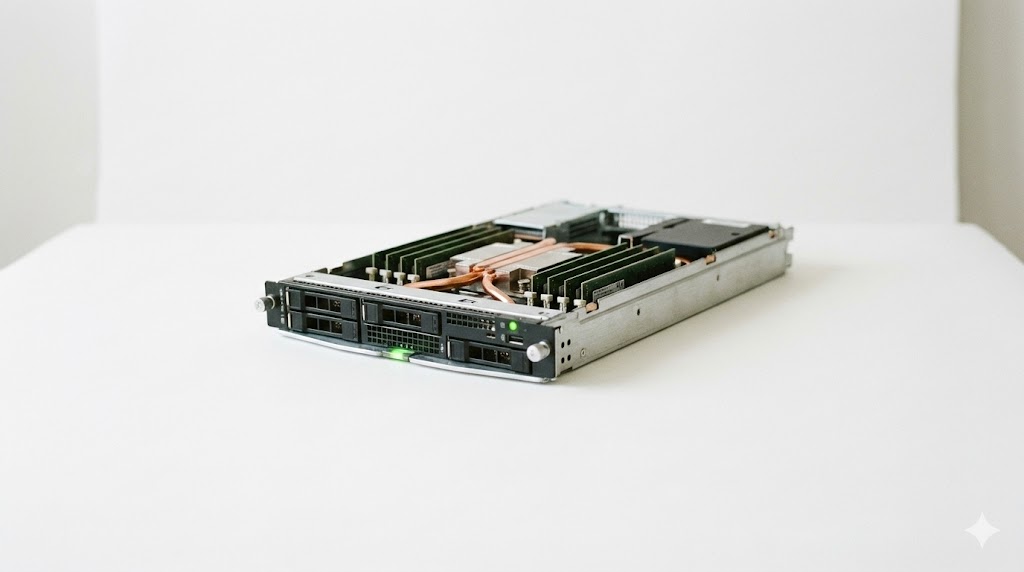
The AI industry is facing a paradox: the more popular a service like ChatGPT or Claude becomes, the more money its operator loses. This is due to the astronomical costs of NVIDIA GPUs, electricity, and cooling. To break free from this dependency, Microsoft has unveiled its custom AI chip, the Maia 200. Built on TSMC's 3nm process, it delivers 10 PFLOPS (FP4) and 5.07 PFLOPS (FP8), with a power consumption of only 750W—roughly half of NVIDIA's 1400W. The central question is: can this chip end the industry's reliance on NVIDIA?
⚙️ The Strategy: Reducing Dependency, Not Beating NVIDIA
Why Microsoft Built Its Own Chip
Microsoft is the largest consumer of AI compute power through its Azure cloud and services like Copilot. This makes them the biggest buyer of NVIDIA GPUs, creating a massive cost structure. The Maia 200 is not designed to be a 'NVIDIA killer' but rather a strategic tool to reduce dependency and gain leverage in negotiations. As Rebelion CEO Park Sung-hyun stated, claiming to beat NVIDIA in general performance is a lie, but there is potential in specific, optimized workloads.
The Token Factory Concept
Jensen Huang, CEO of NVIDIA, recently described data centers as 'Token Factories'—facilities that produce 'intelligence' in the form of tokens. Maia 200 is Microsoft's engine for this factory, designed to produce tokens at a lower cost. The chip's 30% improvement in price-performance over the latest generation hardware is a clear indicator of this strategy.
📅 Information based on market data as of April 2026.

🔬 The Real Battlefield: Interconnects and HBM Memory
The Scalable Fabric Bottleneck
AI models are too large for a single GPU. They require thousands of GPUs to be linked together via a high-speed network, known as a 'Scalable Fabric'. NVIDIA's proprietary NVLink is the industry standard for this. Without this fabric, even the best chip becomes a bottleneck. This is the moat that makes it difficult for competitors to replace NVIDIA.
The Unsung Hero: HBM Memory
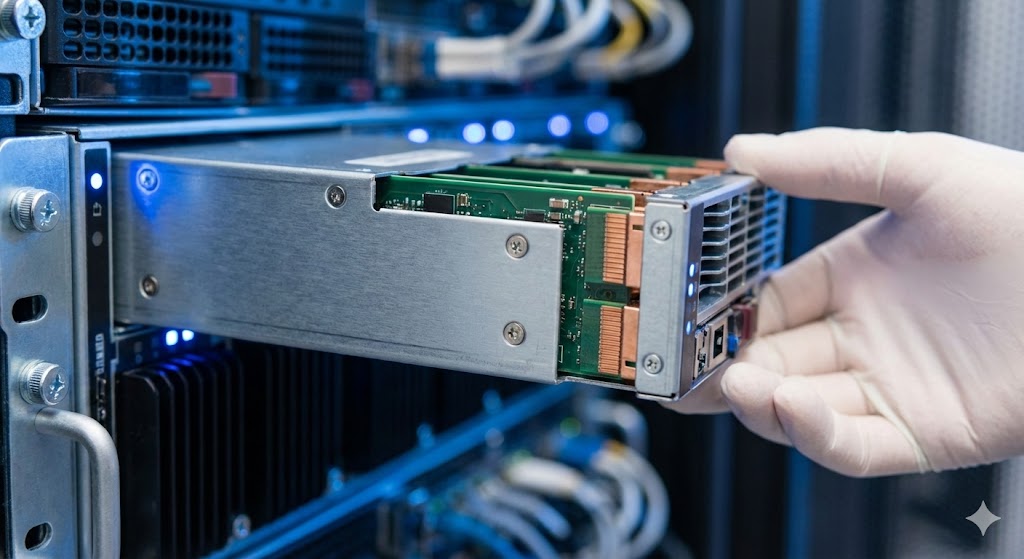
Regardless of who makes the chip—Microsoft, Amazon, or NVIDIA—none of them function without High Bandwidth Memory (HBM). The market leader is SK Hynix, followed by Samsung Electronics. The 'Maia 200', 'NVIDIA Rubin', or 'Amazon Trainium 3' are all just 'scrap metal' without HBM. This makes the HBM supply chain the most critical and profitable part of the AI hardware ecosystem.
| Component | Key Player | Market Position | Current Estimated Price | User Rating (5.0) |
|---|---|---|---|---|
| AI Accelerator | NVIDIA (H100/B200) | Dominant (80%+ share) | $30,000+ | 4.5 |
| Custom Chip | Microsoft (Maia 200) | Emerging (Internal use) | N/A (Captive) | N/A |
| HBM Memory | SK Hynix (HBM3E) | #1 (50%+ share) | ~$5,000 per stack | 4.8 |
| Foundry | TSMC (3nm) | #1 (90%+ share) | ~$20,000 per wafer | 4.7 |
🏁 Conclusion: The Shift from Performance to Efficiency
The AI war has fundamentally changed. It is no longer about who can build the biggest model, but who can run it the cheapest. The winners are not just chip designers, but the entire ecosystem: the 'pickaxe sellers' like NVIDIA, the 'material suppliers' like SK Hynix and Samsung, and the 'infrastructure builders' like TSMC. The Maia 200 is a harbinger of this new era. It won't kill NVIDIA, but it will force the market to focus on token cost, power efficiency, and the critical importance of memory and interconnects. This is the beginning of a new, more complex, and more profitable hardware landscape.
📅 Information based on market data as of April 2026.
📚 Related Articles
- Blast from the Past Building a High-End Gaming PC in the SilverStone FLP01 Retro Case
- Speediance Gym Monster 2 Review Is This All-in-One Smart Home Gym Worth It?